
IVAN KIPRUTO AND NATHALIE EKLUND CONQUER THE MAASAI MARA
Four Days Through the Wild: Migration Gravel Race Delivers Another Kenyan Epic
Migration Gravel Race is not a conventional gravel race. It is a four-day journey through one of the most striking landscapes in the sport: the Maasai Mara, Kenya. Over 650 kilometres and 8,000 metres of elevation gain, riders face open plains, remote tracks, cattle trails, wildlife paths and long days where endurance becomes as important as speed.
As part of the Gravel Earth Series, Migration Gravel Race brings a unique identity to the international gravel calendar. It is not only one of the most demanding events of the season, but also one of the most distinctive. Few races combine elite competition, expedition-style riding and such a deep connection with place.
The 2026 edition once again showed why Kenya has become one of the most powerful stages in gravel racing. The race unfolded across four demanding stages from June 16 to 19, with heat, wind, technical terrain and the vastness of the Mara shaping every move.
The Migration Experience
Migration Gravel Race is defined by contrast.
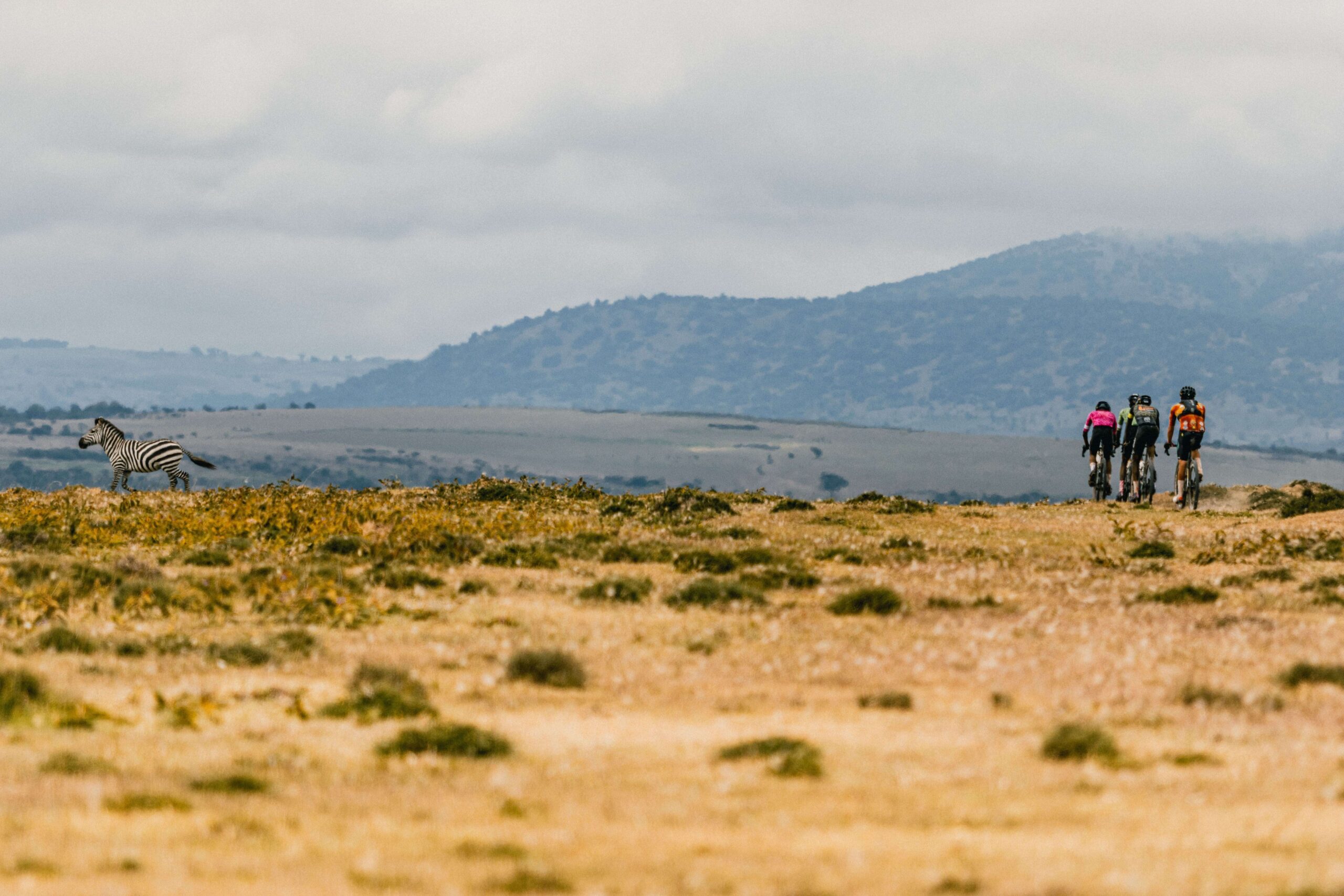
The course moves through wide savannah, rough gravel roads, black clay sections, fast open tracks and rugged climbs. Riders share the landscape with local communities, herders, cattle, safari vehicles and wildlife. Zebras, wildebeests, giraffes and other plains animals are part of the environment, creating a setting that feels far removed from the usual structure of European or North American gravel events.
That is what makes this Kenya gravel race different.
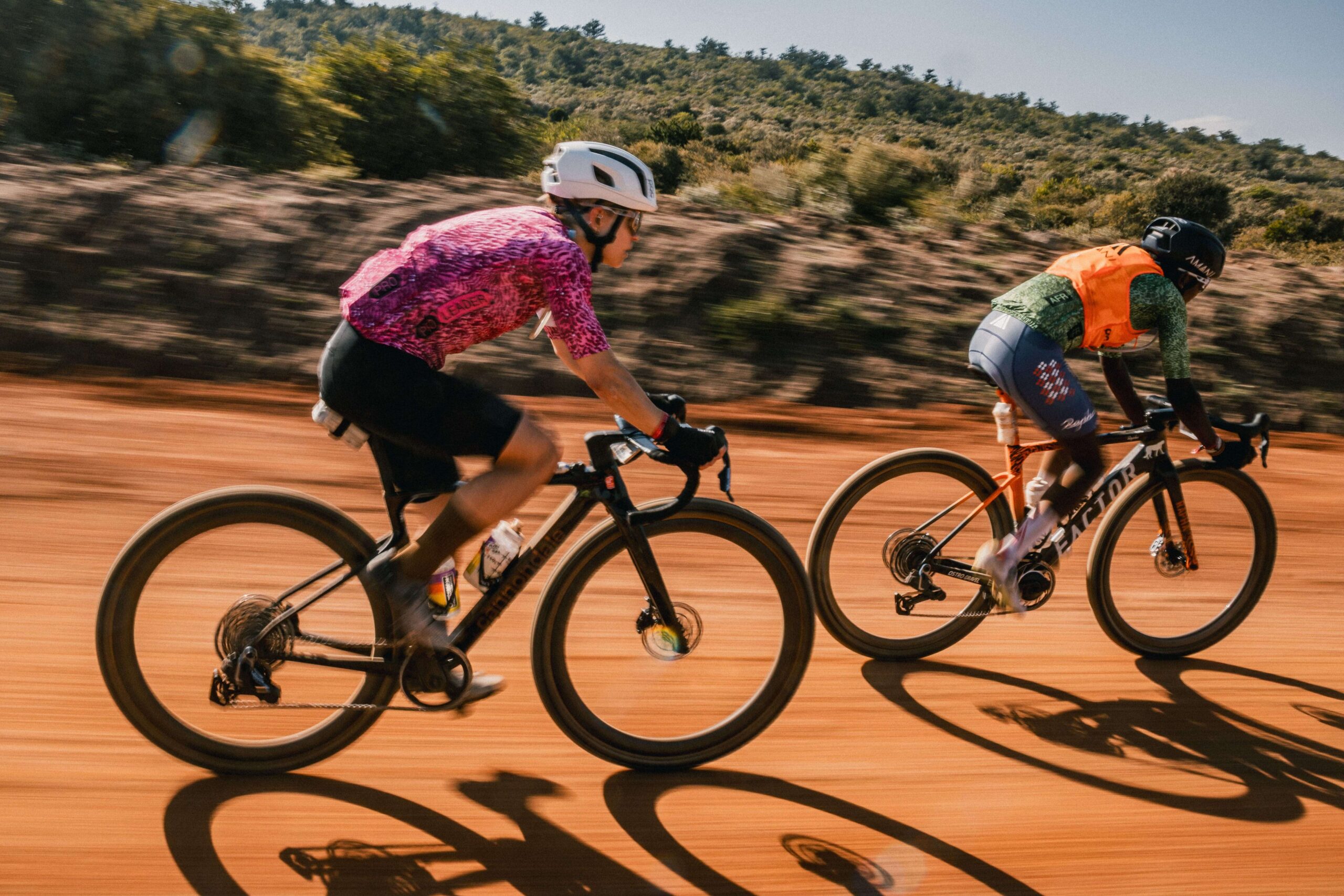
It is not only about racing from point to point. It is about adapting to a living landscape. The terrain changes constantly. The wind can turn flat sections into a psychological battle. Rain can transform the surface into heavy clay. Technical tracks demand focus. Long distances punish any mistake in pacing, hydration or equipment choice.
For experienced gravel cyclists, Migration is a complete test. It rewards strength, but also patience. It rewards courage, but also respect for the land. It is one of the clearest examples of what international gravel events can become when performance, adventure and culture meet in the same race.
A Race Shaped by Local Talent
The men’s race was dominated by a remarkable performance from the Black Mambas Development Squad.
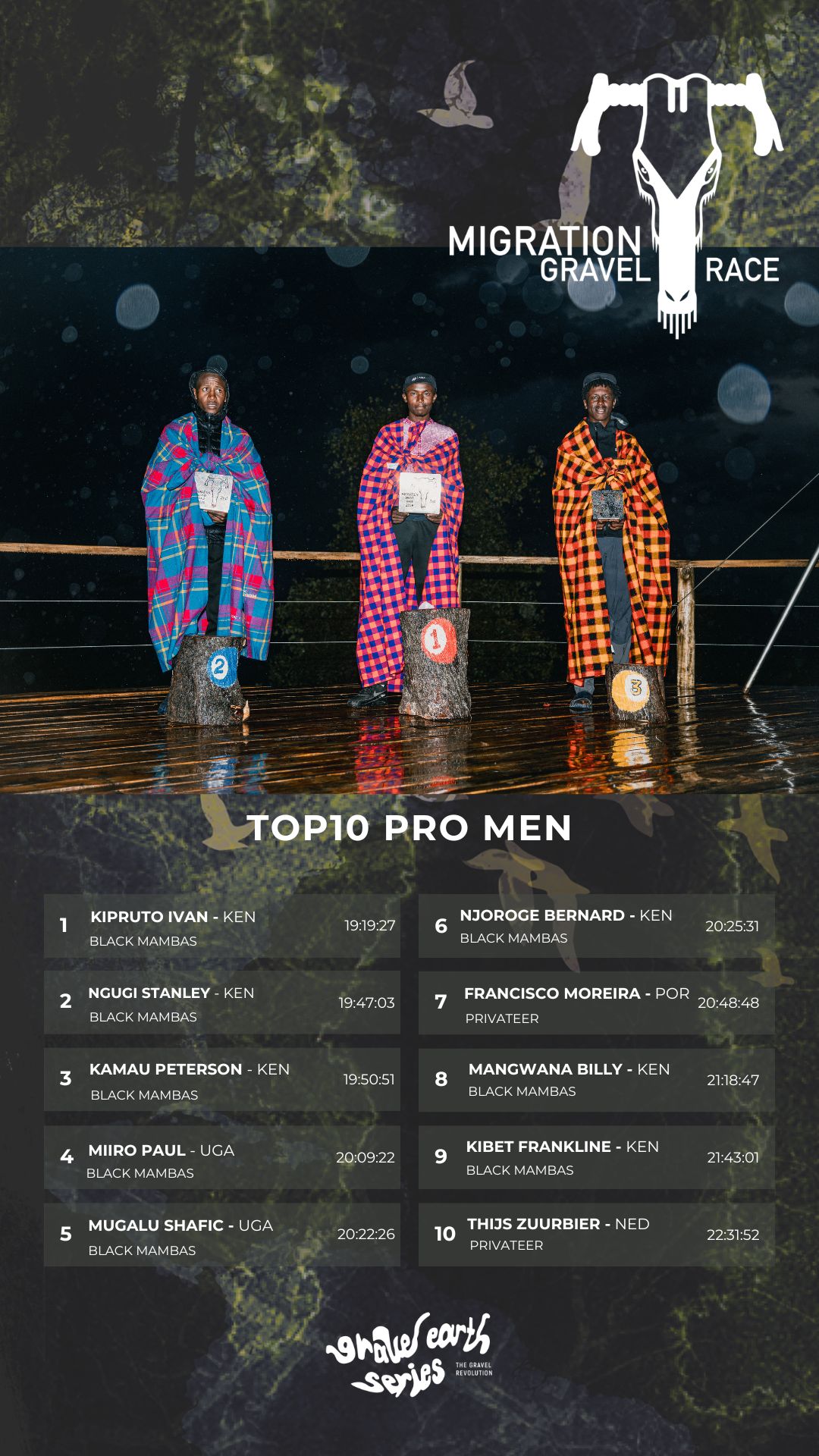
Ivan Kipruto took the overall victory in 19:19:27, leading a Kenyan sweep of the top three. Stanley Ngugi finished second in 19:47:03, while Peterson Kamau completed the podium in 19:50:51. Behind them, Paul Miiro and Shafik Mugalu, both from Uganda and also racing with Black Mambas Development Squad, finished fourth and fifth.
It was a result that carried sporting weight beyond the classification sheet. Migration Gravel Race has always been closely linked to the growth of East African cycling. In 2026, that connection was visible at the front of the race.
The men’s competition was fast, physical and consistent across all four stages. Kipruto did not simply survive the conditions. He mastered them. His victory confirmed the strength of the local and regional riders on terrain that demands technical confidence, endurance and instinct.
Men’s Top 5
- Ivan Kipruto — Kenya — Black Mambas Development Squad — 19:19:27
- Stanley Ngugi — Kenya — Black Mambas Development Squad — 19:47:03
- Peterson Kamau — Kenya — Black Mambas Development Squad — 19:50:51
- Paul Miiro — Uganda — Black Mambas Development Squad — 20:09:22
- Shafik Mugalu — Uganda — Black Mambas Development Squad — 20:22:26
Francisco Moreira was the first non-African rider in the men’s ranking, finishing seventh in 20:48:48. His result adds important international depth to the race and underlines the growing appeal of Migration Gravel Race among riders from across the global gravel cycling scene.
Nathalie Eklund Takes Control in the Women’s Race
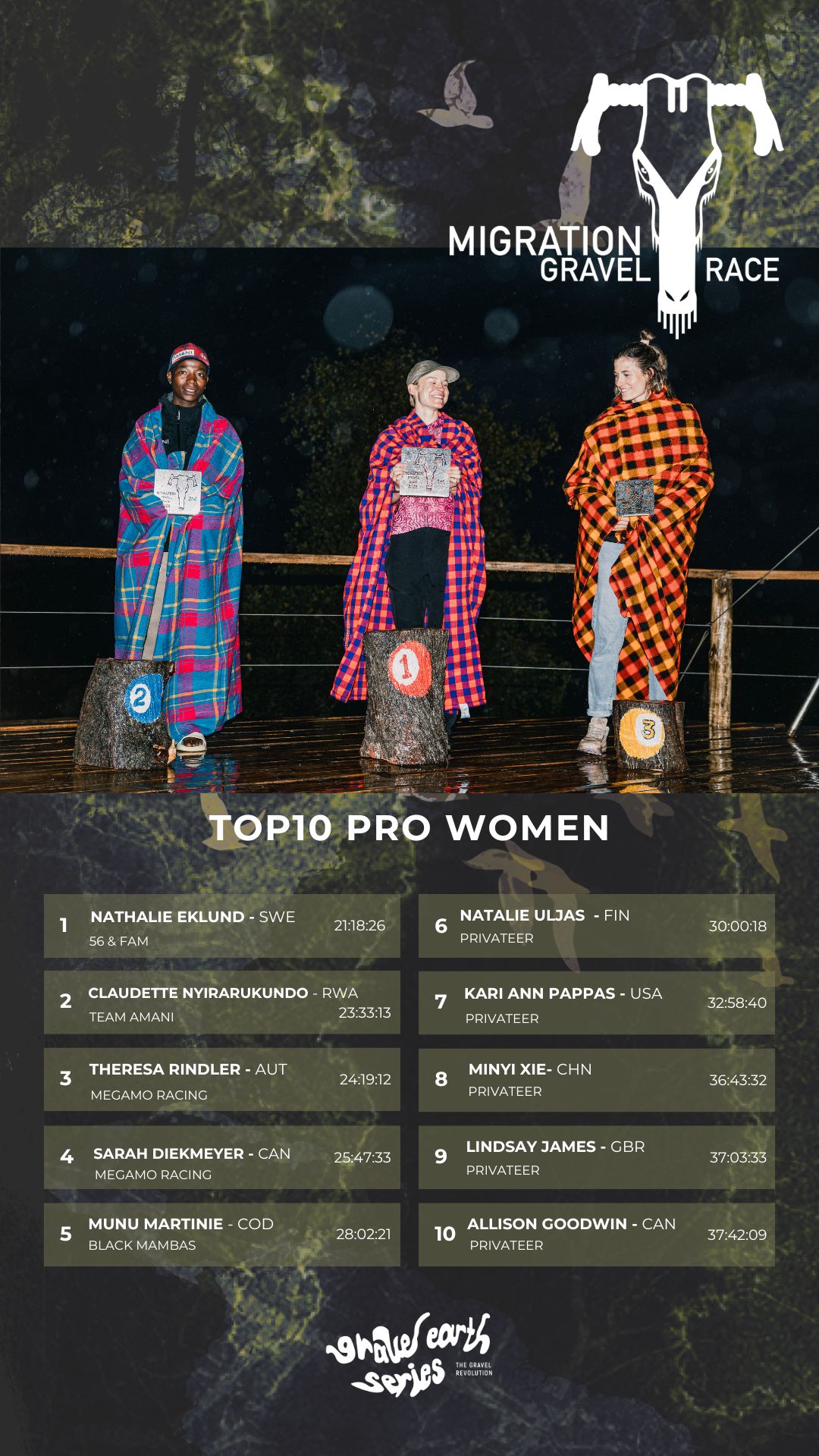
In the women’s race, Nathalie Eklund delivered a strong and composed performance to take overall victory in 21:18:26.
The Swedish rider, racing for 56&Fam, finished ahead of Claudette Nyirarukundo of Rwanda, who placed second in 23:33:13 for Team Amani. Theresa Rindler-Bachl of Austria completed the podium in 24:19:12 for Megamo Racing.
Eklund’s win was built on consistency. Across a race where the conditions rarely allow riders to settle into rhythm, she managed the terrain, the distance and the demands of stage racing with authority.
Behind her, Nyirarukundo confirmed once again the strength of African women’s cycling, while Rindler-Bachl added another important international result for the Megamo Racing structure. Sarah Diekmeyer, also racing for Megamo Racing, finished fourth, with Munu Martinie from the Democratic Republic of Congo completing the top five for Black Mambas Development Squad.
Women’s Top 5
- Nathalie Charlote Angelica Eklund — Sweden — 56&Fam — 21:18:26
- Claudette Nyirarukundo — Rwanda — Team Amani — 23:33:13
- Theresa Rindler-Bachl — Austria — Megamo Racing — 24:19:12
- Sarah Diekmeyer — Canada — Megamo Racing — 25:47:33
- Munu Martinie — Democratic Republic of Congo — Black Mambas Development Squad — 28:02:21
The women’s field reflected the international character of the event, with riders from Sweden, Rwanda, Austria, Canada, the Democratic Republic of Congo, Finland, the United States, China and the United Kingdom represented inside the top ten.
Beyond the Result Sheet
Migration Gravel Race is a reminder that gravel racing is still at its best when it feels uncertain.
The numbers matter. Kipruto and Eklund leave Kenya as the winners. Ngugi, Kamau, Nyirarukundo and Rindler-Bachl leave with podium performances. The Black Mambas Development Squad, Team Amani, Megamo Racing and 56&Fam all helped shape the sporting narrative of the race.
But Migration is also about something larger.
It is about waking up in the Mara and facing another long stage. It is about reading the terrain. It is about sharing roads with wildlife and local communities. It is about racing in a place where the environment is not a backdrop, but part of the challenge itself.
For Gravel Earth Series, Migration Gravel Race strengthens the global identity of the circuit. It shows that gravel cycling can be competitive, international and deeply connected to the landscapes it crosses.
The season now continues, with more international gravel events still to come and the battle for the Gravel Earth Series classification far from decided.
Kenya has delivered one of the most memorable chapters of the year. And once again, Migration Gravel Race has proved why it stands among the most unique gravel races in the world.